The Vikings had no horned helmets. They were invented in 1876.
Not one horned helmet has been found in a Viking Age context. The image comes from the costumes Carl Emil Doepler (1824–1905) designed for Wagner’s Ring at Bayreuth: the horns were needed so the character could be read from the back rows.
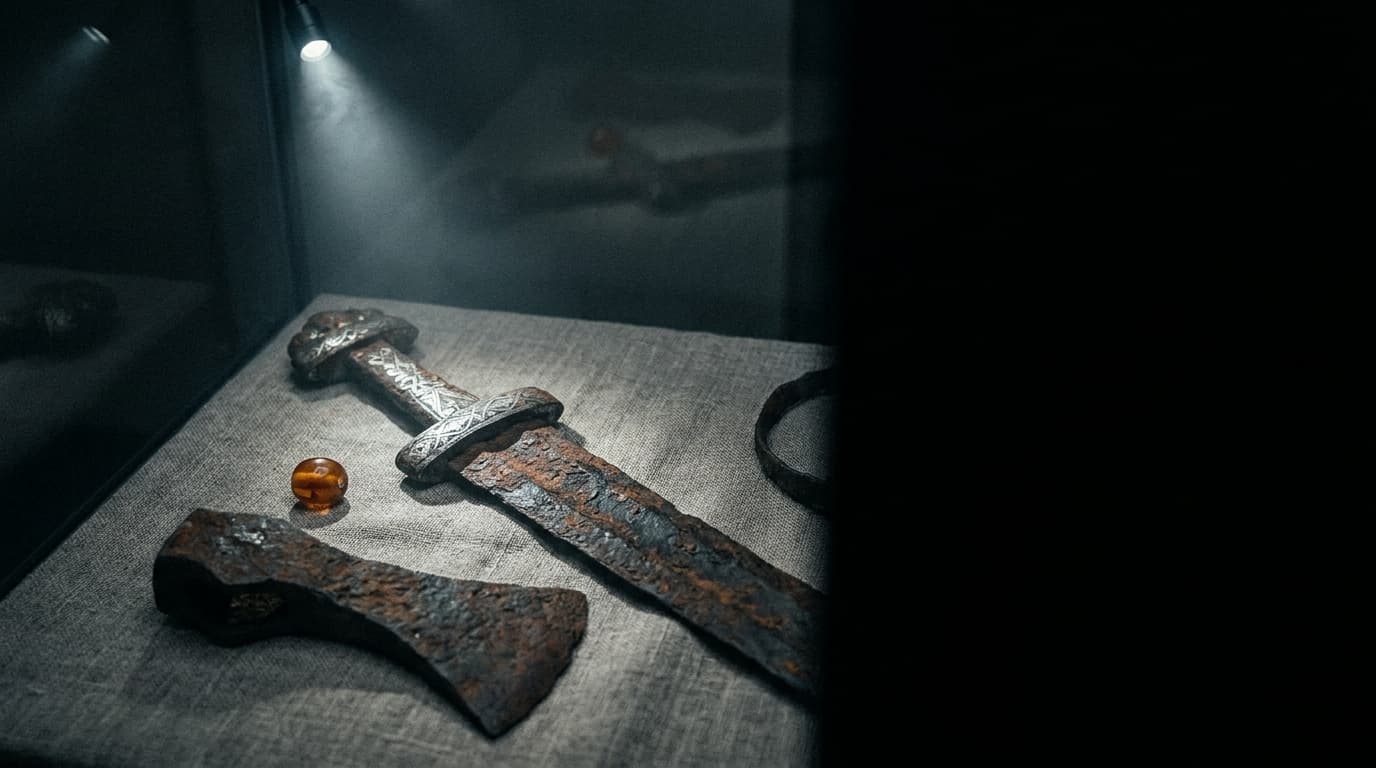
Exactly one complete Viking Age helmet has ever been found.
The helmet from Gjermundbu in Norway is the only one preserved entire. It has a half-mask and no horns of any kind.
Four English days of the week are named after Norse gods.
Tuesday is Týr, Wednesday is Odin (Woden), Thursday is Thor, Friday is Frigg. The calendar turned out to be more durable than the religion.
Hundreds of English villages carry Norse names.
The endings -by and -thorpe are the mark of the Danelaw. Whitby, Grimsby, Scunthorpe are not English names but Danish ones that simply stuck.
England was conquered in 1066 by descendants of Vikings.
William of Normandy was the great-great-grandson of Rollo, granted the land in 911. It happened three weeks after Harald Hardrada fell at Stamford Bridge.
The Viking image we know was assembled in the nineteenth century.
Romanticism and national movements turned scattered sea companies into a heroic people with a single character. The horned helmet, the pathos and the “northern blood” come from there too.
Clinker boats are still being built.
About a thousand people in northern Europe make all or part of their living building, repairing and using such boats. The tradition is a working one, not a museum piece.
A tenth-century Danish king’s name is on a technology in every phone.
Harald Bluetooth united lands; Bluetooth was meant to unite devices from different makers. The mark is built from two of his runes.
Icelanders read thirteenth-century sagas almost without translation.
Island isolation and a written tradition preserved the language so well that modern Icelandic remains close to Old Norse. For new concepts Icelanders still prefer to build words from their own roots rather than borrow.
English took even the pronoun “they” from the Norse.
The borrowings sit at the very core of the language: they, them, their, and also sky, skin, knife, egg, window, husband, law. The two languages were close enough that words crossed over without translation.
On the Isle of Man the word for parliament is still “thing” — and it has been sitting since 979.
Tynwald on the Isle of Man traces itself to a Norse popular assembly and is reckoned the oldest continuously functioning parliament in the world. Its name comes from the same þing as the Icelandic Althing.