Skip to content
NORDICA
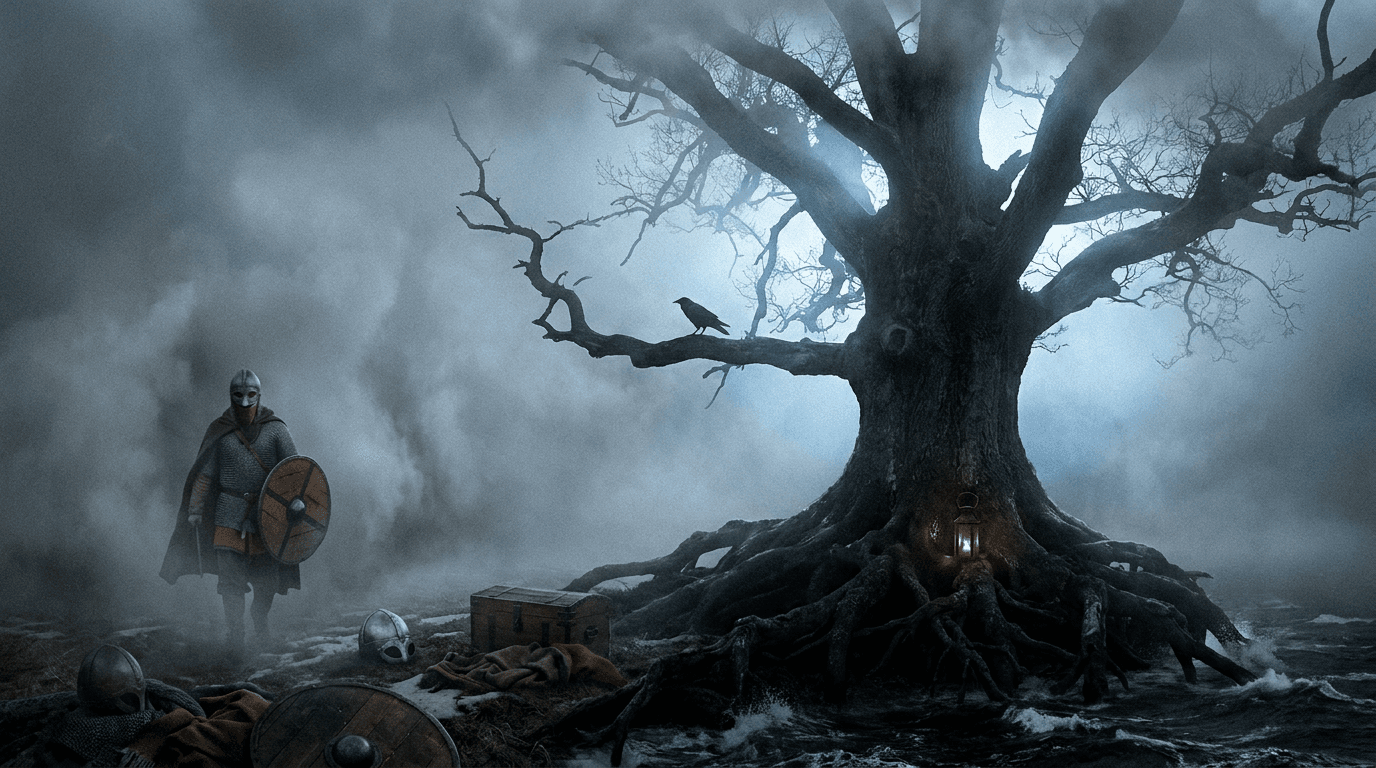
An enormous ash tree rising out of freezing fog

Section 6 of 9

Mythology

Yggdrasil, the Æsir and the Vanir, Ragnarök — and the two centuries between the belief and its writing down.

Before you read on

We do not possess a single text written down by a pagan of the Viking Age. The Poetic Edda survives in a manuscript of about 1270; the Prose Edda was written by Snorri Sturluson around 1220 — two centuries after Christianisation, and by a man of Christian culture.

That does not mean the myths were invented. It means we read them through an intermediary, and in any retelling it is worth holding in mind that part of the tidiness of this world picture is the work of a medieval editor rather than of Viking belief.

The pantheon

Every card records how solidly we know the figure at all. Thor is spoken for by thousands of amulets and a day of the week; Heimdallr by fragments in two texts. They cannot be put on the same footing.

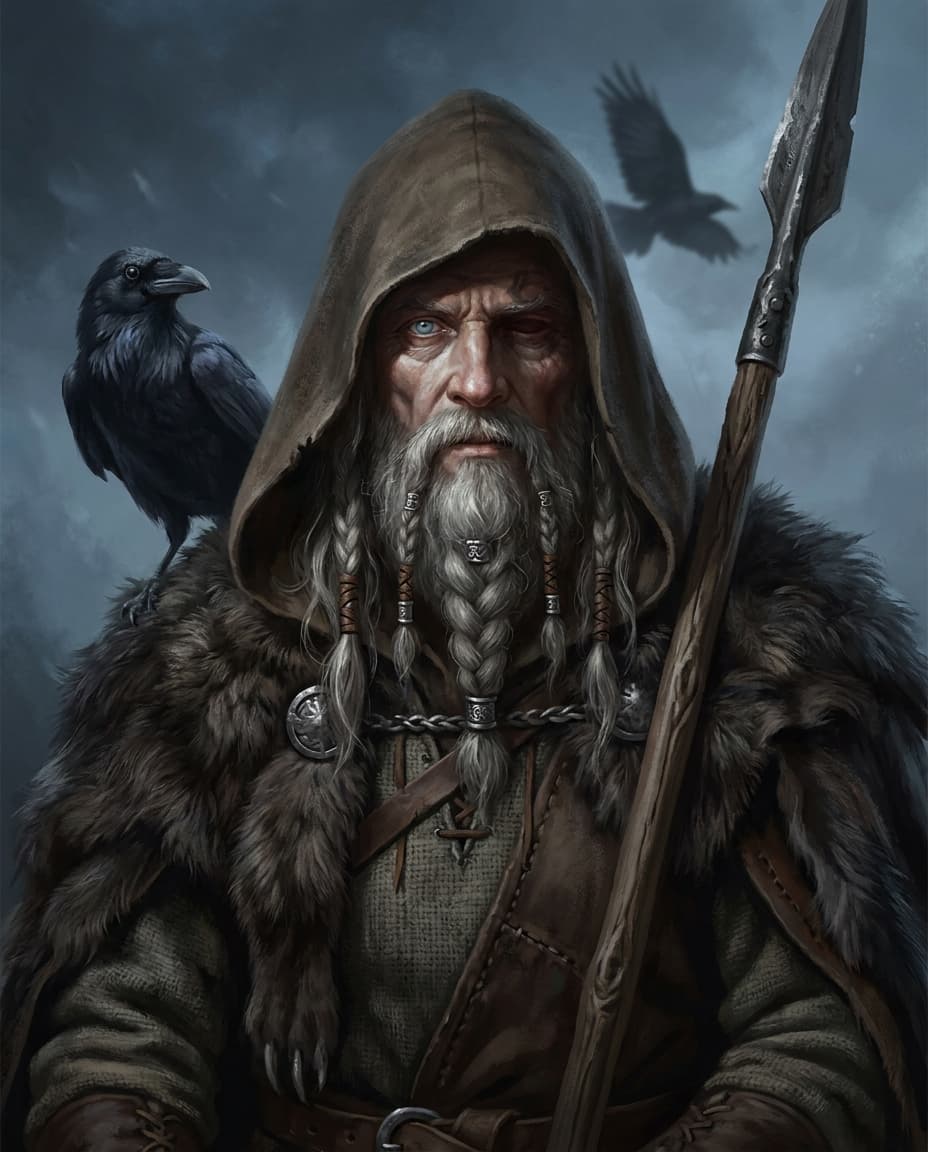
Odin — All-father, god of wisdom and of the slain

Óðinn

Odin

All-father, god of wisdom and of the slain

Lord of Asgard, but neither a thunderer nor a farmer’s patron. Odin is the god of knowledge bought with mutilation: he gave an eye for a draught from the well of wisdom and hung nine nights on the tree, pierced by a spear, to win the runes. He also chooses who falls in battle, which is why chieftains prayed to him and ploughmen did not.

Spear
Gungnir — it never misses
Ravens
Huginn and Muninn — thought and memory
Wolves
Geri and Freki
Horse
Eight-legged Sleipnir
Hall
Valhalla, where the slain wait

Widely attested

His name underlies Wednesday (Odinsdag), is scattered through Scandinavian place names and is reported by outsiders — Adam of Bremen describing the temple at Uppsala.

Yggdrasil and the nine worlds

A matter of scholarly dispute— what is argued

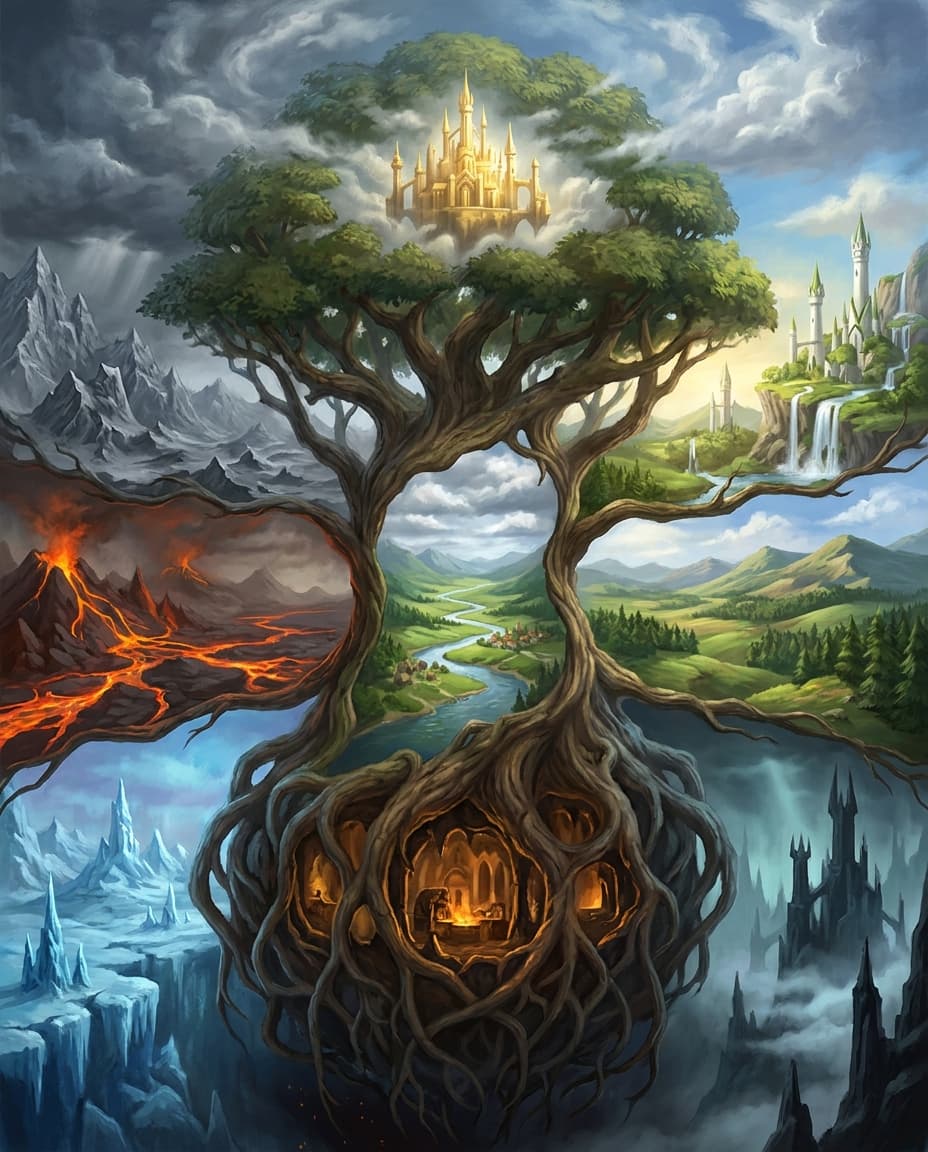
The sources mention “nine worlds” (níu heimar), but no text gives a full list. The familiar nine was assembled by later scholars and popularisers: different authors assemble different nines, and some of the names occur in the texts only once, or in another sense. The diagram below is the most widespread reconstruction, not testimony from the age.

Yggdrasil, the world tree: nine worlds in the crown, around the trunk and among the roots
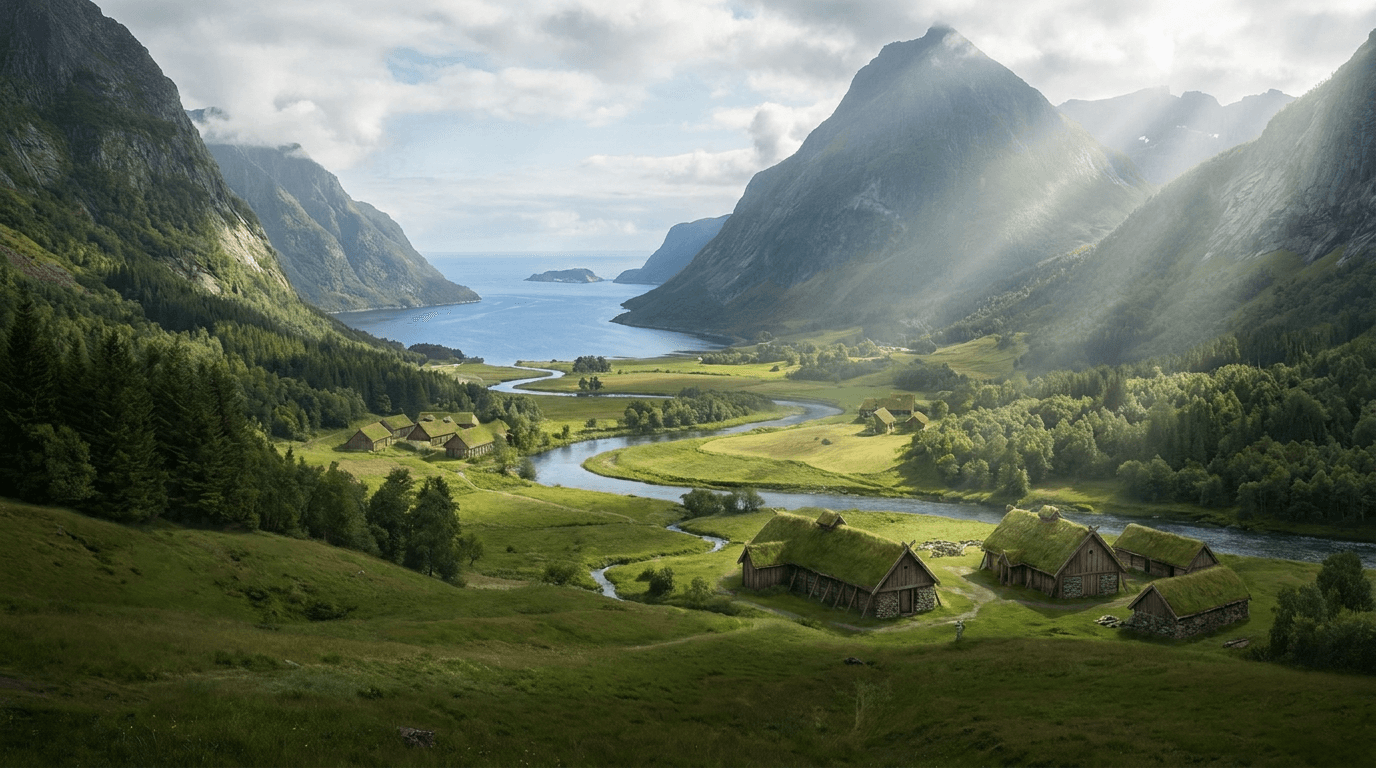
Midgard: The middle enclosure

Humans

Midgard

Miðgarðr · The middle enclosure

The world of people — “middle” not as praise but as position: it lies in the centre, ringed by the ocean, and in that ocean lies the serpent Jörmungandr biting its own tail. According to the Prose Edda the earth was made from the body of the giant Ymir, and the fence around it from his eyelashes.

What surrounds it
The world ocean
In the ocean
The serpent Jörmungandr
How it was made
From the body of the giant Ymir
Defender
Thor

Named in the sources

One of the commonest words in the mythological texts.

Field note

03

Burial archaeology

late tradition

Can a grave describe a single afterlife?

Cremation, inhumation, chamber graves and boat burials coexisted in the Late Iron Age; one monument could contain several people and animals. Graves reveal ritual, status and how the living shaped the memory of the dead.

Facts and sources

11 entries, 1 of them disputed

The main source for Norse mythology wrote as a Christian.

Snorri Sturluson was an Icelandic politician and scholar of the Christian era. He collected the old stories as heritage rather than belief — and in places explained the gods in a classical manner.

Yggdrasil is the ash tree that binds the worlds together.

The Norns sit at its roots, the squirrel Ratatoskr runs up and down its trunk, and the tree itself is being gnawed without pause — the world rests on something that is continuously being destroyed.

The familiar list of nine worlds is a modern reconstruction.

The sources mention “nine worlds” (níu heimar), but not one text gives a full list. The familiar nine — Asgard, Midgard, Jötunheim and the rest — was assembled by later scholars and popularisers.

A matter of scholarly dispute— what is argued

The number nine is genuinely in the sources. What is disputed is the membership: different scholars assemble different nines, and some of the names occur in the texts only once, or in another sense.

Odin is a god not only of wisdom but of frenzy, deceit and the hanged.

He gives up an eye for knowledge and hangs himself on a tree, sacrificing himself to himself. This is not a kindly sky father but an unsettling and dangerous deity.

Ragnarök is not an ending but the close of a cycle.

After the gods fall and the fire passes, the earth rises from the sea again, and the surviving gods find the old golden game pieces lying in the grass. The story ends not in emptiness but in repetition.

Seeresses held high standing and travelled from farm to farm.

A völva was sent for when trouble struck a settlement, and she was received with honour. The ritual practice of seiðr is associated above all with women.

Only half the slain went to Valhalla.

According to the Poetic Edda the other half is taken by Freyja to her hall Fólkvangr — and she chooses first. Most of the dead, who died of illness and old age rather than in battle, went to Hel, and that was the ordinary lot, not a punishment.

Loki is not Thor’s brother and not Odin’s son at all.

He is the son of the giant Fárbauti and Odin’s sworn brother, not a family member. The kinship with Thor is a twentieth-century invention: in the sources they are travelling companions and permanent sparring partners in insults.